
Best via ferratas in Piedmont: 10 routes from the Val di Susa to the Ossola
Panorama editorial team · Published · Updated
Editorial selection based on public route descriptions (tourist boards, CAI sections, Gulliver, inalto, via-ferrata.de, alpinverse), cross-checked against at least two sources per via ferrata. Where sources disagree we give a range. Times and elevation gain are indicative; check the state of each route before you go.
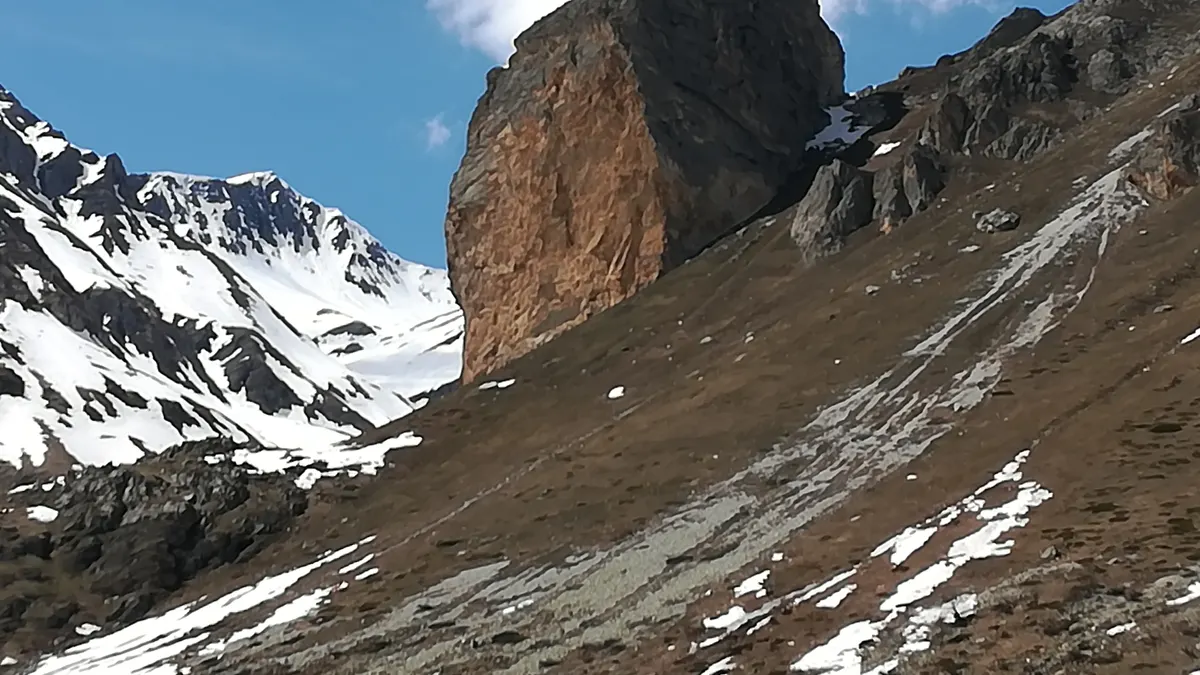
The best via ferratas in Piedmont are the Carlo Giorda to the Sacra di San Michele, the Rouas at Bardonecchia, the Picasass above Lake Maggiore, the Cimalegna at Alagna and, for experienced climbers, the Funs, Camoglieres and Rocca Senghi in the province of Cuneo. To get started, pick the Rouas, Picasass or Infernone; to step up a level, the Sacra, Guido Rossa, Moro Pass and Cimalegna.
Below you will find ten Piedmont via ferratas with area, starting point, grade, elevation gain, times and season. The data comes from public route descriptions checked against each other: where sources disagree, we give a range or an “around”.
What are the best via ferratas in Piedmont?
The table sums up the ten via ferratas, ordered from the most accessible to the most demanding. For grades we use the most common Italian scale: F (easy), PD (slightly difficult), AD (fairly difficult), D (difficult), TD (very difficult). Descriptions using the Hüsler scale (A, B, C, D, E) have been roughly converted: B about PD, C about AD, D about D.
| Via ferrata | Area | Grade | Elevation gain | Total time | Best time |
|---|---|---|---|---|---|
| Rouas | Bardonecchia, upper Val di Susa (TO) | PD/AD (D variant) | 150-250 m of ferrata | 2-3 h 30 | April-November |
| Picasass | Baveno, Lake Maggiore (VB) | PD | about 320 m of ferrata | about 4 h | Spring and autumn |
| Infernone | Sordevolo, Biellese (BI) | PD/AD | about 300 m total | about 3 h | Almost all year |
| Guido Rossa | Caprie, lower Val di Susa (TO) | PD/AD | about 340 m of ferrata | about 3 h | Almost all year |
| Carlo Giorda, Sacra di San Michele | Sant’Ambrogio, lower Val di Susa (TO) | PD/AD, long | 550-600 m of ferrata | 4 h 30-5 h | Almost all year |
| Moro Pass | Macugnaga, Valle Anzasca, Ossola (VB) | PD/AD, high altitude | about 250 m of ferrata | about 2 h from the cable car | Summer |
| Cimalegna Emilio Detomasi | Alagna, Valsesia (VC) | AD/D | 300-330 m of ferrata | about 2 h 30 | June-October |
| Funs Ico Quaranta | Entracque, Valle Gesso (CN) | D | 400-600 m total | 3 h 30-4 h | Spring-autumn |
| Camoglieres | Macra, Valle Maira (CN) | D | about 340 m | about 3 h | April-October |
| Rocca Senghi | Bellino, Valle Varaita (CN) | D, first section hardest | about 600 m total | 4 h or more | Summer |
If you are coming from another region, compare this list with our guides to the best via ferratas in Lombardy and the best via ferratas in Trentino: Piedmont offers shorter, quieter routes, often an hour from Turin.
What is the easiest via ferrata in Piedmont for beginners?
The three via ferratas best suited to a first try have short approaches, modest elevation gain and escape routes or variants.
Rouas via ferrata (Bardonecchia)
- Area and start: upper Val di Susa. From the Bardonecchia exit of the A32, follow signs for Melezet and Pian del Colle, where you park (about 1,400 m).
- Grade: the main line is PD/AD; the athletic Balma del Camoscio variant is D; the short Grotta (cave) variant is PD.
- Elevation gain and times: 150-250 m depending on the source. Approach and return of about 10 minutes each, about 2 hours for the main line, up to 3 hours 30 if you do all the variants.
- Season: April to November.
- Why go: it was equipped with beginners and young climbers very much in mind, with a small bridge and an escape route from the “shoulder” halfway up.
- Watch out: the sport variant has been closed in the past. Do not mistake the D variant for the main line.
Picasass via ferrata (Baveno)
- Area and start: Lake Maggiore, Verbano-Cusio-Ossola. Start from the hamlet of Tranquilla in Baveno, near the campsite, following path M3 and then M3b.
- Grade: PD. The crux is an exposed, slightly overhanging arête in the first half.
- Elevation gain and times: about 320 m of ferrata. About 35 minutes of approach, 2 hours on the ferrata and 80 minutes of descent on path M3.
- Season: spring and autumn are the most pleasant; this low down it gets hot in summer.
- Why go: pink granite and lake views, finishing at the summit cross of Monte Camoscio (890 m).
- Watch out: the suspension bridge just below the summit is optional and can be bypassed.
Infernone via ferrata (Sordevolo)
- Area and start: Biellese, a few kilometres from Biella. There is no parking at the start: leave the car in the village.
- Grade: PD/AD. Several descriptions treat it more as an equipped path along the stream, with three suspension bridges that get shorter one after another.
- Elevation gain and times: about 300 m, about 3 hours in all.
- Season: described as doable all year round.
- Why go: the gorge setting along the stream, with its suspension bridges, is a change from the classic wall routes.
- Watch out: when wet, the woodland sections and walkways get slippery; the way back is long.
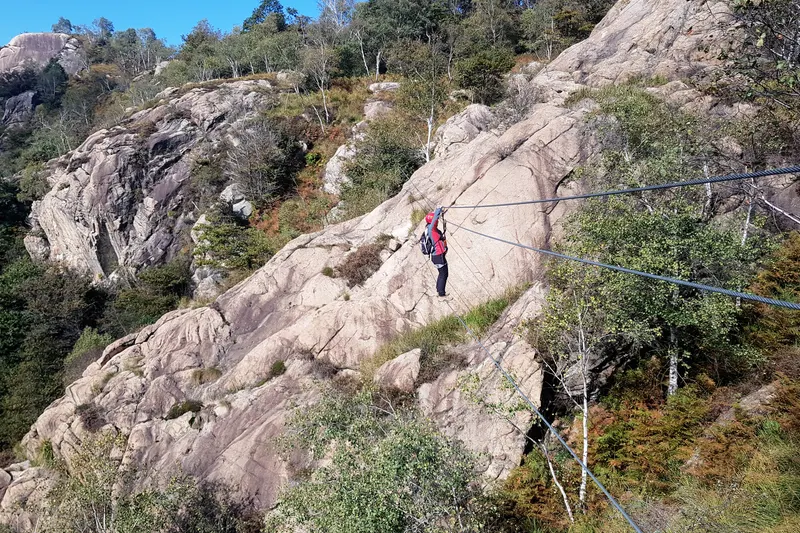

Which via ferratas should you do in the Val di Susa?
The lower Val di Susa is the handiest area if you are setting off from Turin: two south-facing rock routes you can climb for most of the year.
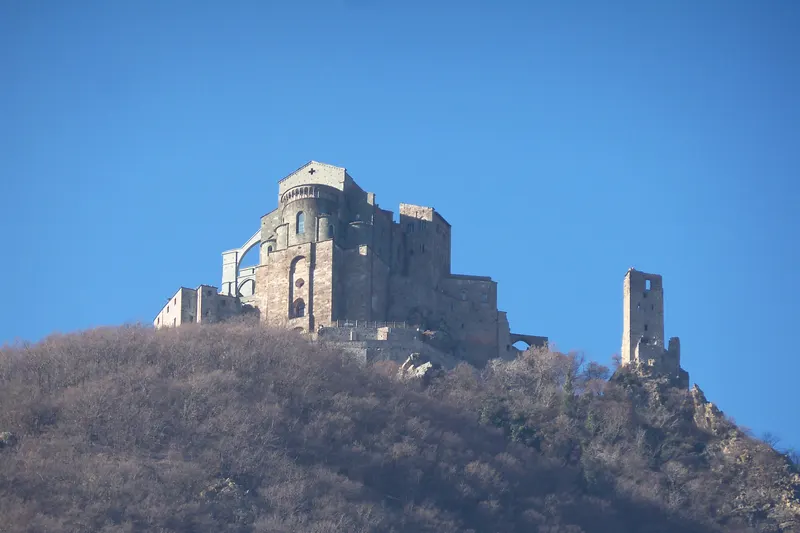
Carlo Giorda via ferrata to the Sacra di San Michele (Sant’Ambrogio di Torino)
- Area and start: from the Croce Bell’Alda, above Sant’Ambrogio (about 350-400 m). Leave the A32 at Avigliana, then take the SS25 towards Susa.
- Grade: PD/AD. There are no extreme technical moves: the real challenge is the length.
- Elevation gain and times: 550-600 m. About 3 hours 30 on the ferrata, about 1 hour of descent, 4 hours 30 to 5 hours in all.
- Season: all year round according to the tourist board; in summer start early, as the slope gets a lot of sun.
- Why go: you top out right under the walls of the Sacra di San Michele, one of Piedmont’s great landmarks. Two suspension bridges come near the end.
- Watch out: two escape routes, at Pian Cestlet and at the Saut du Cin, let you bail out. In places the rock is polished and slippery. The descent goes via San Pietro and back to Sant’Ambrogio.
Guido Rossa via ferrata (Caprie)
- Area and start: Caprie, from the A32 Avigliana Ovest exit and then the SS24. Park in the village and follow the noticeboard for the Rocca Bianca.
- Grade: PD/AD. An easier lower section and a steeper upper one, with short overhanging stretches.
- Elevation gain and times: about 340 m (from 375 to 715 m). About 3 hours in all, with a walk back of about 35 minutes.
- Season: dark, south-facing rock, doable almost all year round.
- Why go: you can stop after the first section and walk down, which makes it a good “trial” via ferrata.
- Watch out: suspension bridge of about 25 m, which a variant lets you avoid. In April 2025 the direct descent was closed because of a rockfall, with a longer detour: check the latest status.
What are the best via ferratas in the Ossola and Valsesia?
In northern Piedmont the most interesting via ferratas are high up, at the foot of Monte Rosa, and are reached by lift.
Moro Pass via ferrata (Macugnaga)
- Area and start: Valle Anzasca, Ossola. Park at Staffa and take the Monte Moro cable car; from the top station it is about 30 minutes to the start.
- Grade: PD/AD. Not technically hard, but a very exposed ridge route at around 2,900-3,000 m.
- Elevation gain and times: about 250 m. About 1 hour on the ferrata and about 2 hours in all from the cable car.
- Season: summer, while the cable car is running: check the lift timetable.
- Why go: a high ridge via ferrata you can reach by cable car. An extension takes you to the summit of the Joderhorn (3,036 m).
- Watch out: a suspension bridge is the most exposed point. The altitude adds to fatigue, cold and the risk of storms.
Emilio Detomasi via ferrata on the Cimalegna (Alagna Valsesia)
- Area and start: from Alagna by cable car to Pianalunga (2,046 m), then towards the Bocchetta delle Pisse. Sources disagree on which stretch is done by lift and which on foot: check with Monterosa lifts.
- Grade: AD/D. Athletic, exposed sections in the first part.
- Elevation gain and times: 300-330 m of ferrata, about 2 hours 30.
- Season: June to October according to route descriptions, depending on when the lifts are open.
- Why go: ridges and vertical walls facing Monte Rosa, with a suspension bridge of about 30 m.
- Watch out: to get back you can carry on along the ridge to the Passo dei Salati and ride the cable car down. Check the time of the last run.

What are the most demanding via ferratas around Cuneo?
The three Cuneo routes in this guide are all graded D. They call for experience, trained arms and the willingness to turn back at the start if it does not feel right.
Funs “Ico Quaranta” via ferrata (Entracque)
- Area and start: Valle Gesso. About 1 hour on foot from the centre of Entracque, or about 20 minutes from the hamlet of Tetti Violin.
- Grade: D, French style, with lots of iron rungs.
- Elevation gain and times: 400-600 m depending on where you start (start at around 1,050 m, finish at around 1,600 m). About 3 hours 30 to 4 hours in all.
- Season: spring to autumn, avoiding the peak heat (indicative only: route descriptions give no season).
- Why go: an athletic, low-altitude via ferrata with a very airy suspension bridge.
- Watch out: the first section is the hardest, with several overhanging moves, and once you are on it turning back is very difficult. Decide at the start.
Camoglieres via ferrata (Macra)
- Area and start: lower Valle Maira. From Dronero drive up to Lottulo and turn off for Camoglieres; car park with an information board before the village (980 m).
- Grade: D, very physical, opened in 2006.
- Elevation gain and times: about 340 m to the Crocetta Soprana (1,320 m), about 3 hours on the ferrata.
- Season: April to October or November; avoid the hottest days, as the wall is in full sun.
- Why go: ledges, natural chimneys and a suspension bridge, with easy escape paths.
- Watch out: read the board at the start for access conditions and restrictions.
Rocca Senghi via ferrata (Bellino)
- Area and start: upper Valle Varaita. From Casteldelfino towards Bellino, past the Rifugio Melezè, to the gravel car parks near the chapel of Sant’Anna.
- Grade: D, with the first section the hardest; some descriptions grade it even higher. Not for beginners.
- Elevation gain and times: about 600 m in all, start at about 2,190 m, summit at 2,450 m. Route descriptions give about 4 hours, but allow more.
- Season: summer and early autumn, with no snow on the route.
- Why go: an isolated rock tower above the pastures, with the remains of Vallo Alpino fortifications.
- Watch out: the descent goes through a dark wartime tunnel, equipped but steep: bring a head torch. In places the rock is crumbly.
Which via ferratas are closed or need checking?
Some Piedmont via ferratas often mentioned online are closed or have conflicting information. We have left them out of the main list:
- Orrido di Foresto (Val di Susa): in May 2025 it was closed by municipal decree after a cable on a suspension bridge gave way.
- Orrido di Chianocco (Val di Susa): access was banned by a municipal order and in 2023 it was still closed.
- Walserfall (Valle Antigorio, Ossola): reported closed due to damage in March 2026.
- Chaberton batteries (Claviere): reported closed for maintenance in July 2025.
If a via ferrata is closed by order, do not climb it: on top of the risk, there are legal and insurance consequences.
When is via ferrata season in Piedmont?
It depends on the altitude. Low-valley routes such as the Sacra, Guido Rossa and Infernone can be done almost all year round, with spring and autumn the best seasons. In summer, set off at dawn.
Routes above 2,000 m, such as Cimalegna, Moro Pass and Rocca Senghi, are best planned between late June and September or so, and depend on lingering snow and lift timetables.
Afternoon thunderstorms are common in summer, especially up high. A steel cable on an exposed ridge is the worst place to be caught by lightning: check the forecast the evening before and again that morning, and plan to be off the via ferrata by early afternoon.
What do you need for a via ferrata?
The minimum kit, also required by the boards at the start of many via ferratas, is:
- A certified mountaineering helmet.
- A sit or full-body harness.
- An EN 958 certified via ferrata set, with energy absorber and two karabiners. Do not improvise with slings or old sets: energy absorbers have a limited lifespan and some models have been recalled.
- Via ferrata gloves, to protect your hands from the cable.
- Stiff-soled shoes with good grip, a head torch (essential on the Rocca Senghi), water, a warm layer and a waterproof.
If you do not have the gear you can hire it at several places in the valley; at Camoglieres, for example, the kit can be rented at the Locanda del Silenzio.
How do you choose the right via ferrata for your level?
Look at three things, not just the grade:
- The hardest section, not the average. The Funs and Rocca Senghi pack their difficulty into the start, and turning back is tricky.
- Length and the way back. The Carlo Giorda has no extreme moves, but with 550-600 m of ferrata it is more tiring than a short D.
- Altitude and exposure. Moro Pass is technically moderate but runs along an airy ridge at around 3,000 m.
A sensible progression: Rouas or Picasass, then Guido Rossa and Sacra, then Cimalegna, and only after that the D routes around Cuneo. For your first outing, go with a mountain guide or a CAI section.
What should you check before you set off?
Via ferratas change: rockfall, floods, frost and wear can damage cables, rungs and bridges, and local councils can close them by order overnight. No via ferrata is free of risk, not even the easiest.
Before you go:
- Check the state of the route with the local council, the park authority, the local CAI section or the valley’s mountain guides.
- Check the weather and storm forecast, and lift timetables if you need them to go up or down.
- Study the way back: some descents are long, exposed or go through a tunnel.
- Tell someone your route and when you expect to be back.
In an emergency call 112 and, if you have it installed, open GeoResQ, the service run by the Italian Alpine and Cave Rescue Corps with the CAI that sends your position to the control room.
We are building Panorama, the app for mountain lovers focused on via ferratas and bivouac huts. In the meantime you can find our other regional guides in all the blog guides.
Sources
- Turismo Torino: Carlo Giorda via ferrata to the Sacra di San Michele
- Turismo Torino: Rouas via ferrata
- Alpinverse: Carlo Giorda via ferrata, Monte Pirchiriano
- Alpinverse: Rouas via ferrata
- Alpinverse: Guide di Macugnaga via ferrata, Passo del Moro
- inalto: Sacra via ferrata from Sant’Ambrogio
- inalto: Funs Ico Quaranta via ferrata
- Climbing.place: Funs via ferrata
- Compagnia della Cima: Guido Rossa via ferrata at Caprie
- Compagnia della Cima: Orrido di Foresto via ferrata
- via-ferrata.de: Guido Rossa at Caprie
- via-ferrata.de: Infernone via ferrata
- via-ferrata.de: Rocca Senghi via ferrata
- via-ferrata.de: Walserfall via ferrata
- Planetmountain: Infernone via ferrata
- Planetmountain: Emilio Detomasi via ferrata on the Cimalegna
- Monterosa Ski: Cimalegna via ferrata
- Distretto Turistico dei Laghi: Moro Pass via ferrata
- Distretto Turistico dei Laghi: Picasass via ferrata
- VareseNews: the Picasass via ferrata
- Valle Maira: Camoglieres via ferrata
- Cuneo Climbing: Camoglieres via ferrata topo
- Gulliver: Rocca Senghi via ferrata
- Gulliver: closure of the Orrido di Foresto via ferrata
- Gulliver: Orrido di Chianocco via ferrata
- Gulliver: Chaberton via ferratas

Your Piedmont via ferratas, in one app
Panorama is the app for mountain lovers, coming soon to iPhone, built for people who love via ferratas and bivouac huts. Find out about the project and what we are building.
Discover Panorama Panorama Sci, free on iPhone and Android.Panorama Sci app · free


FAQ
What is the easiest via ferrata in Piedmont?
Of the routes in this guide, the best for beginners is the main line of the Rouas via ferrata at Bardonecchia, with around 150-250 m of elevation gain, a 10-minute approach and a small bridge. Good alternatives are the Picasass via ferrata at Baveno and the Infernone at Sordevolo. Even an easy via ferrata calls for a full kit and someone experienced the first time.
What are the hardest via ferratas in Piedmont?
The most demanding include the Funs via ferrata at Entracque, the Camoglieres via ferrata in the Valle Maira and the Rocca Senghi via ferrata in the Valle Varaita, all graded D. They have vertical or overhanging sections where you need strong arms. On the Rocca Senghi, altitude and a descent through a tunnel add to the challenge.
How many via ferratas are there in the Val di Susa?
The Val di Susa has one of the highest concentrations in Piedmont, with more than ten equipped routes between the lower and upper valley. Some, however, are closed or subject to local orders, such as the Chianocco and Foresto gorges. The busiest are still the Carlo Giorda to the Sacra di San Michele, the Guido Rossa at Caprie and the Rouas at Bardonecchia.
Can you do via ferratas in winter in Piedmont?
Some low-lying, sunny via ferratas, such as the Carlo Giorda and the Guido Rossa in the lower Val di Susa, are described as doable almost all year round. With ice, snow or wet rock, though, the difficulty changes a lot. High routes such as Cimalegna, Moro Pass and Rocca Senghi should be considered summer only.
Do you need a mountain guide to do a via ferrata?
It is not compulsory, but it is a good idea for your first via ferrata or when stepping up a level. A mountain guide will teach you how to use your set, handle exposed sections and judge the weather and the way back. In Piedmont many local guides run trips on the via ferratas of their own valley.
What should you do if there is an accident on a via ferrata?
Call 112, the single emergency number, and describe where you are as precisely as you can. If you have it installed, open GeoResQ, the CNSAS app run with the CAI that sends your position to the control room. Stay clipped to the cable and take cover from any falling rocks.